
Chicken Stock from Scratch
This chicken stock is a combination of a rich chicken broth and a healing, nutrient dense vegetable stock that tastes so good you’ll enjoy sipping on it plain. It is full of minerals like magnesium, potassium and calcium and contains the bonus of collagen, great for your skin and nails. Add it to your next cleanse, or use it as the base for all your soups.
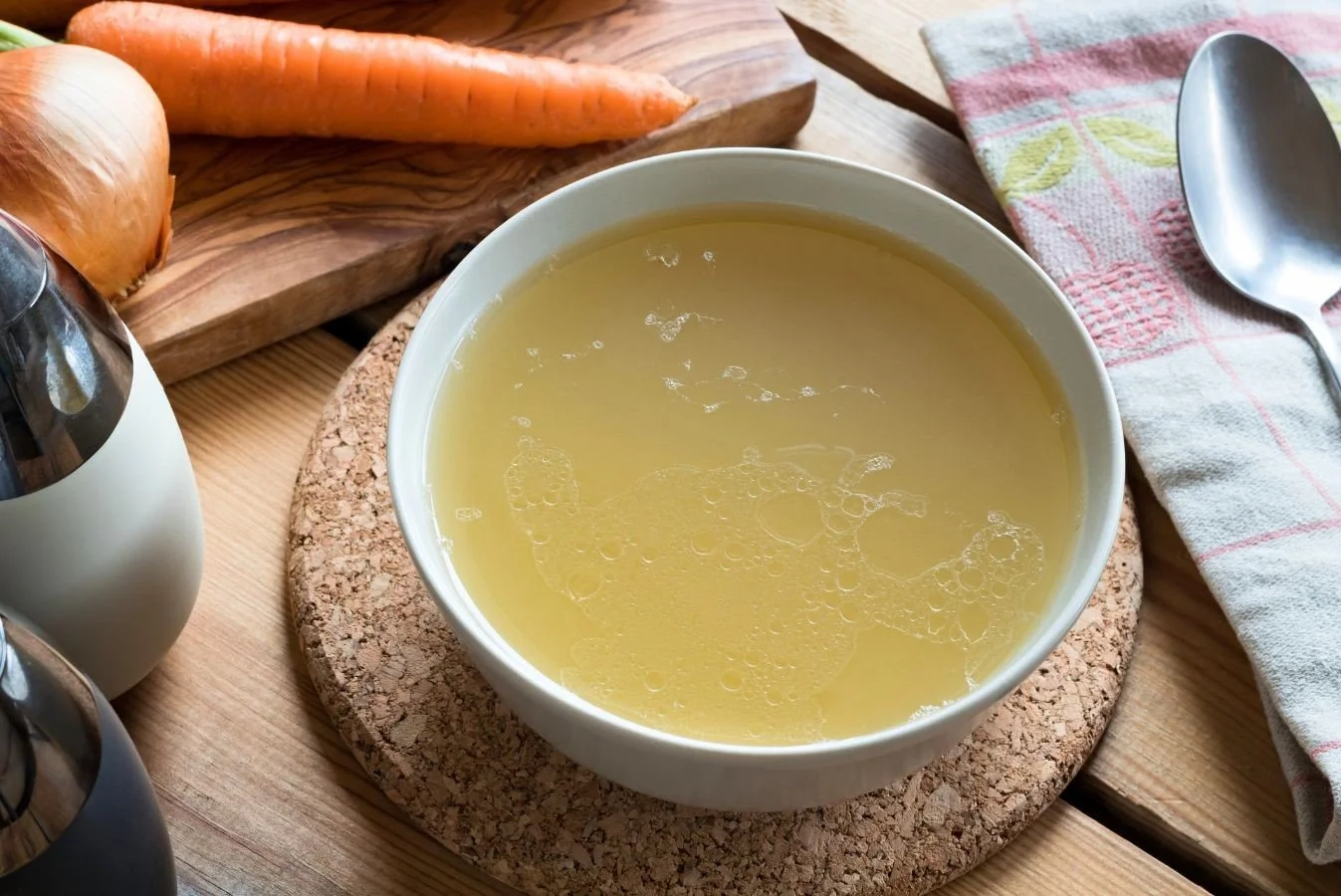
Homemade chicken stock adds robust richness and depth of flavor to your homemade soups. Have you ever drank a mug of store-bought chicken broth? Probably not unless is was from Bonafide or Kettle & Fire. My stock recipe is so good you can heat it up and slurp it down with nothing but a little added salt.
I developed this recipe over many years, taking some ideas from Rebecca Katz's Magic Mineral Broth (which is great for those going through cancer treatments or for healing digestive troubles), and the vegetable stock I developed during my time at Google alongside my head chef.
Cooking Time
This recipe calls for starting the bones simmering first, for 4 hours. Then add the vegetables and simmer for 2 more hours. This helps to not overcook the vegetables. 2 hours is all you need to get the best flavor without any of the vegetables turning bitter. You can absolutely let the bones cook longer if you like. Just wait until the last 2 hours to add all the vegetables.
The Benefits of Chicken Stock
We drink chicken soup when we are sick, in fact we crave it, so our body is smarter than we think. Chicken stock settles the stomach when we are sick, but it does so much more. A good cup of chicken stock helps with boosting gut health and fighting inflammation. I am currently doing a 30-day juice cleanse and on the super cold days or really long, hectic workdays, I have been warming up a mug of this and it really helps to get me through. Plus it gives me a boost of nutrients that I am not getting through food right now.
The Difference Between Stock and Bone Broth
Bone broth typically has an acid in it like vinegar to help release the collagen from the bones and is cooked for an extended time, sometimes 24 hours. You end up with a gelatin-like consistency once the broth cools in the fridge. I am calling my recipe "stock" because I do not add the vinegar and it does not cook as long. Mine is a 6 hour, semi bone broth because it does come out slightly thick.
If you want to try out a traditional bone broth, here are two of my favorite recipes: Nom Nom Paleo and Zenbelly, both fantastic Paleo bloggers.
Bone broth has been getting a lot of attention in the media for its health benefits. Could it be possible that we will be seeing people sipping on a mug of bone broth instead of coffee? It is already happening in Austin at the Picnik Food Truck.
Equipment To Make a Big Batch of Stock
If you want to make stock a regular part of your kitchen routine, I highly recommend getting this 12-quart All-Clad stock pot. Make sure your pot is sturdy and well insulated. A thin stock pot won't do well over this long of a cook time. This is the exact set I have and have been using for over 10 years. It is just so durable and well made that I will never have to replace it.
My stock pot is 12 quarts, a pretty big one. If you do not have a pot this big, take the recipe down to half.
And here is the strainer I use to strain my stock. I set it into another pot and pour all the stock through it. It is a very fine mesh which keeps out all the stuff you don't want in your finished broth.
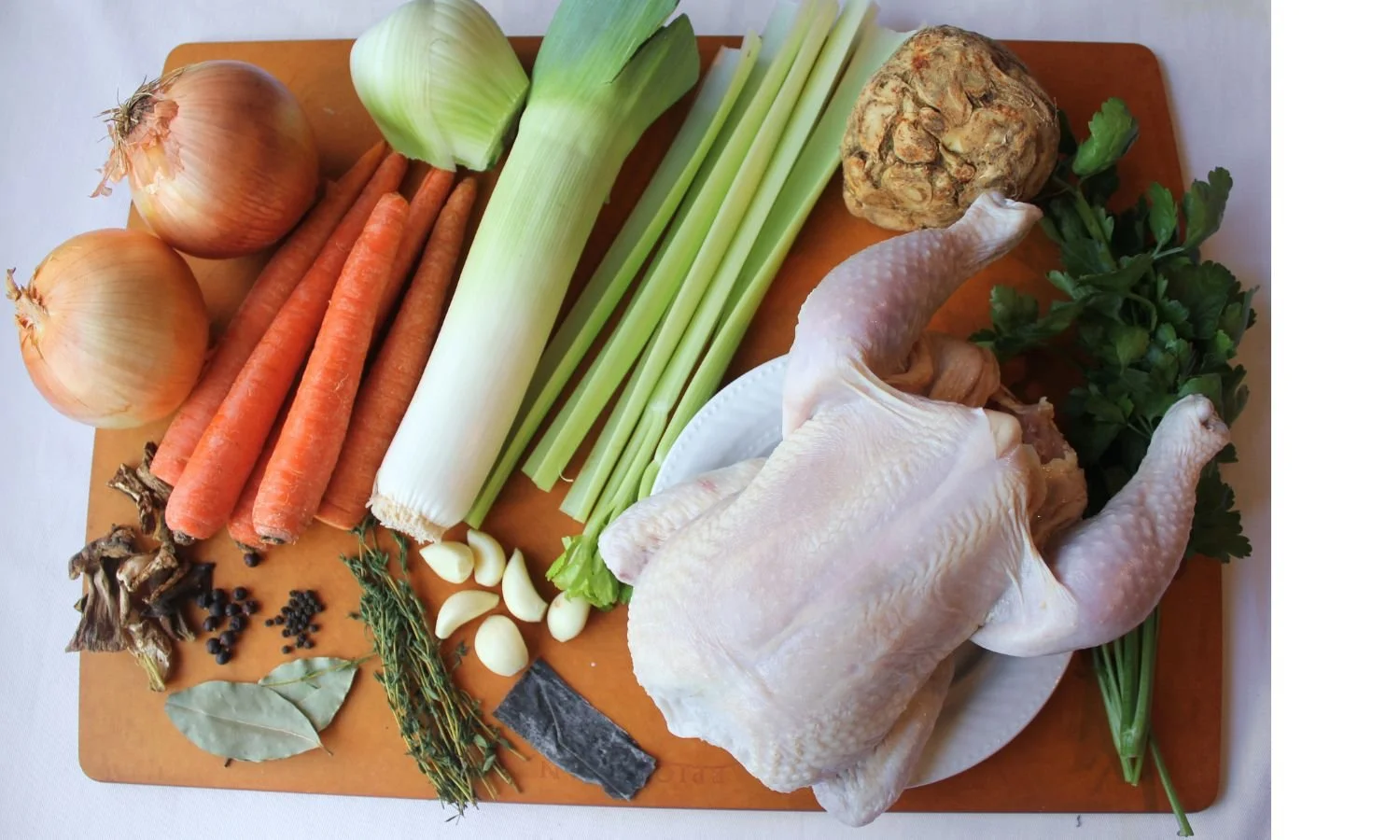
Chicken Stock From Scratch Ingredients
Chicken parts - can be made up of wings, backs, necks, carcass. I always try to include wings because of their higher collagen content
Vegetables- onion, carrot, celery, leek, celery root, fennel, garlic
Herbs - thyme, parsley
Kombu - a dried seaweed that helps with digestion and imparts minerals
Aromatics and Flavor - dried mushrooms, peppercorns, juniper berries, bay leaves
You’ll notice some unusual ingredients in here like the kombu, which I get into below. The chicken and vegetables are pretty standard ingredients in stock. I’ve added in the celery root and fennel because of their earthy properties and the nice layer of flavor they add. Juniper berries are also known to help with digestion and ease bloating.
So this truly is both a delicious stock and nutrient dense healing food.
What is Kombu
Kombu is a dried kelp commonly found in Japan and East Asia. My very first cooking internship was with a macrobiotic food delivery service in Philadelphia and we always added strips of kombu into the pot when cooking dried beans. The founder of my culinary school, The Natural Gourmet, was also a strong supporter of macrobiotic cooking and we used kombu in many recipes there.
Kombu is a foundational ingredient in macrobiotic cooking because it contains nutrients that help the digestion of foods like dried beans. It helps to break down the components in beans that make us gassy when we eat them.
Kombu also imparts some flavor, lovingly referred to as “umami” and it is rich in minerals like iodine, iron and calcium.
Here is a video breaking down the types of kombu.
Here is the full recipe ready for you to print and make in your own kitchen.
Printer-Friendly Recipe

Chicken Stock from Scratch
This is a combination bone broth and vegetable stock. I use this as the base for all my soups as well as sipping on it during cold winter months. It is full of minerals and nutrients, plus the gelatin from the bones. The process of letting the chicken simmer for a few hours first helps to get the most out of the bones, without overcooking the vegetables.
Ingredients
- 5 pounds chicken bones, can be made up of wings, necks, legs and backs
- 2 medium yellow onions, peels removed and chopped into quarters
- 5 medium carrots, chopped into quarters
- 5 celery stalks, chopped into quarters
- 1 leek, well washed, white and light green parts, cut into 3 inch pieces
- 1 small celery root, peeled and cut in large chunks
- 1 fennel bulb, fronds removed, cut in large chunks
- 6 medium garlic cloves, peeled, left whole
- 6 sprigs thyme
- 10 sprigs parsley
- 3 grams dried mushrooms
- 15 peppercorns
- 12 juniper berries
- 2” piece kombu
- 2 bay leaves
Instructions
- Place chicken parts in large stock pot and cover with water to about 3 inches above the chicken. Place over high heat. Once the water comes to a boil, (about 20 minutes) reduce heat until gently simmering. Let simmer 4 hours. While chicken is simmering, gather the rest of the ingredients in a large bowl and set aside.
- At the end of 4 hours, add the remaining ingredients and fill the pot with more water until the vegetables are covered with about 3 inches of water. Bring heat back up to high, and bring to a boil, once boiling reduce heat to about medium, or to where the water is gently bubbling. Let simmer for 2 hours.
- Remove from heat and let cool about 1 hour on the stove. Strain the stock by pouring through a chinoise, or fine mesh strainer into a heat resistant container. This could be another large pot, do not go directly into something plastic while the stock is still hot. If you do not have a fine mesh strainer, line a regular strainer with cheesecloth and pour stock through.
- If you have a layer of fat at the top of the stock, pour into a gravy separator, (you know, that thing you use only once a year on Thanksgiving?) This helps to separate the fat from the stock. If you do not have one of these, it is ok, the fat with harden once in the fridge and can be spooned off the next day before final storage in the fridge or freezer.
- Pour strained stock into desired containers, glass mason jars work great.
- Leave containers on the counter to completely cool, about another hour. Cover and place in refrigerator. If you are not going to use stock within the next 5 days, place in the freezer until ready to use. Will last about 5 days in the fridge and 3 months in the freezer.
Notes
KOMBU
Kombu is.....
You May Also like:
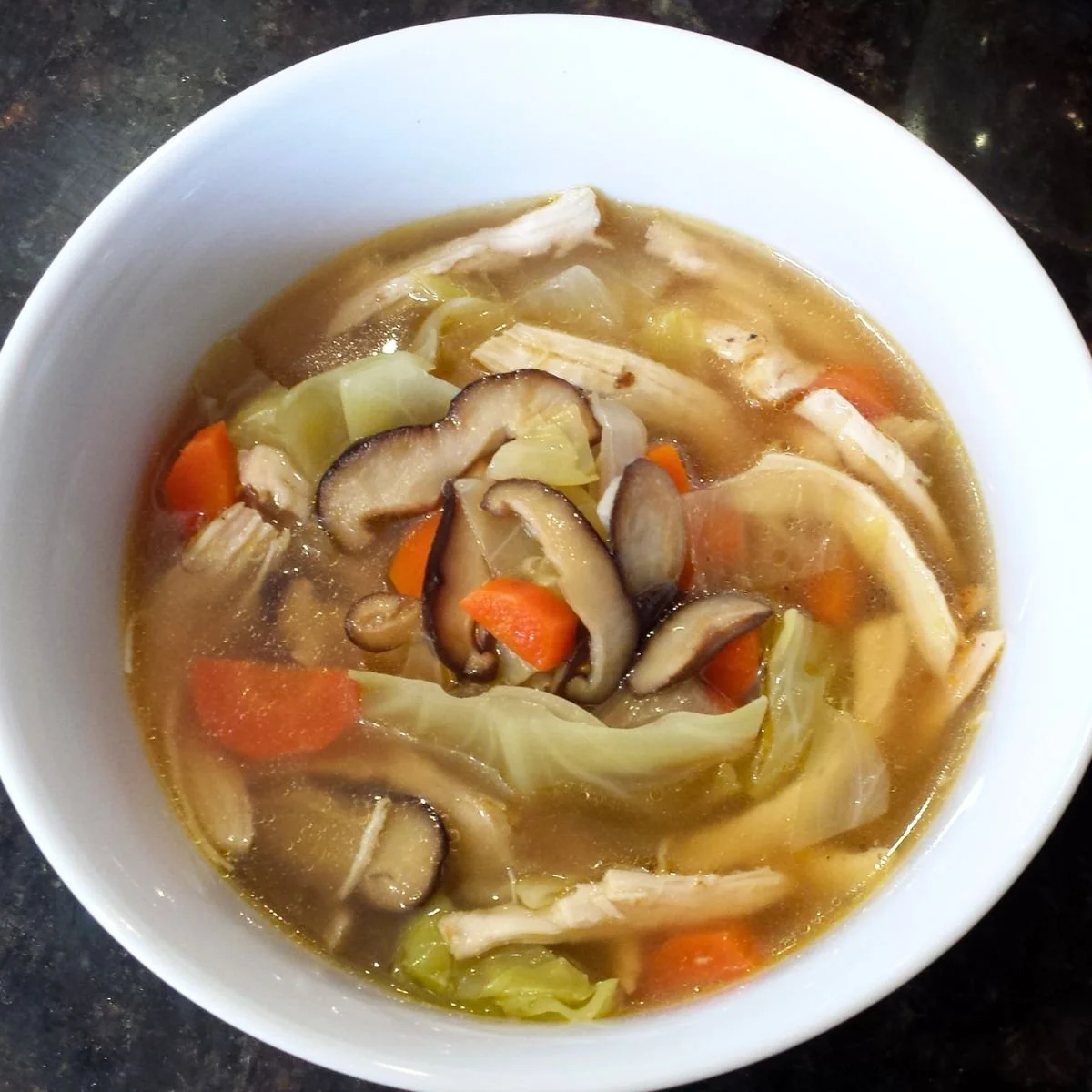
Kristine’s Healing Chicken Soup
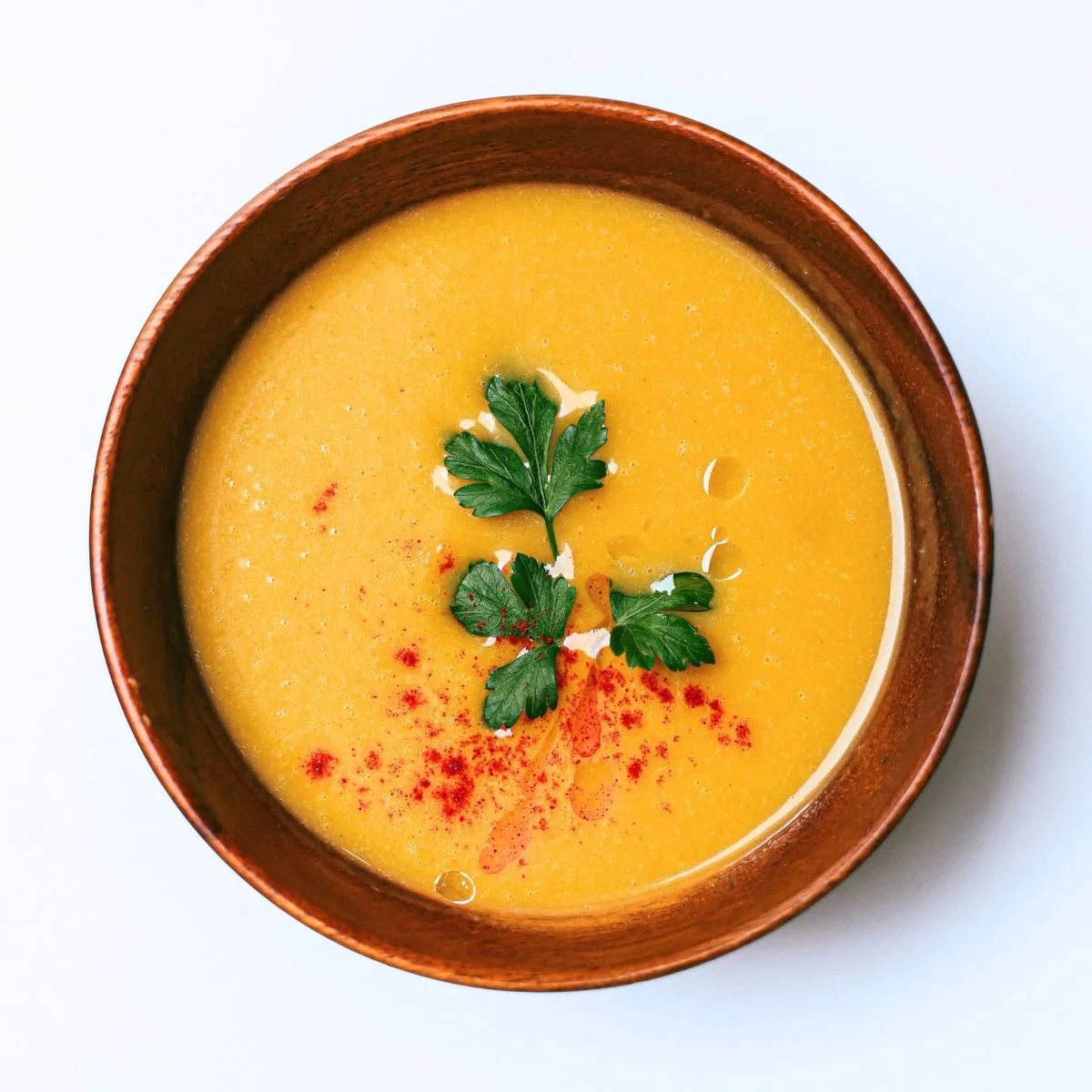
Red Lentil and Coconut Soup

Golden Cauliflower Soup
*Please note, some of the links on this site are affiliate links. As an Amazon Associate I can earn from qualifying purchases, at no additional cost to you. All of the products on my site are actually used by me. I do not recommend anything that is not in my own kitchen.